China’s exhibition industry is expanding with renewed international demand, stronger domestic trade shows, and faster modular construction. UFI’s Global Exhibition Barometer reports continued recovery in exhibition revenues and event activity across major markets. China remains one of the most important production bases for display systems, graphics, lighting, and booth accessories.
This guide examines China’s top 10 Exhibition Standard Stand suppliers through practical criteria. These include material quality, engineering experience, production capacity, customization options, delivery reliability, and after-sales support. A dependable supplier should provide clear drawings, stable panel dimensions, documented electrical components, and realistic installation schedules. Small details matter. A loose connector or uneven graphic can affect an entire booth.
Industry reports also show why supplier selection deserves closer attention. The Global Association of the Exhibition Industry emphasizes measurable service quality, sustainability, and operational efficiency. Freeman’s industry research highlights the growing importance of attendee experience, useful interaction, and memorable physical environments. A low quotation may look attractive, yet weak project management can create hidden costs. This is not always obvious.
The selected companies should therefore be judged beyond online portfolios. Buyers need to verify factory capabilities, sample finishes, fire-safety practices, export experience, and communication procedures. Sustainability claims also require evidence, such as reusable aluminum frames, recyclable graphics, and reduced packaging. No ranking is permanently perfect. Supplier performance can change with team capacity, order volume, and project location. Readers should still request current quotations and inspect recent case studies before making a final decision.
What Defines a Standard Exhibition Stand Supplier in China?
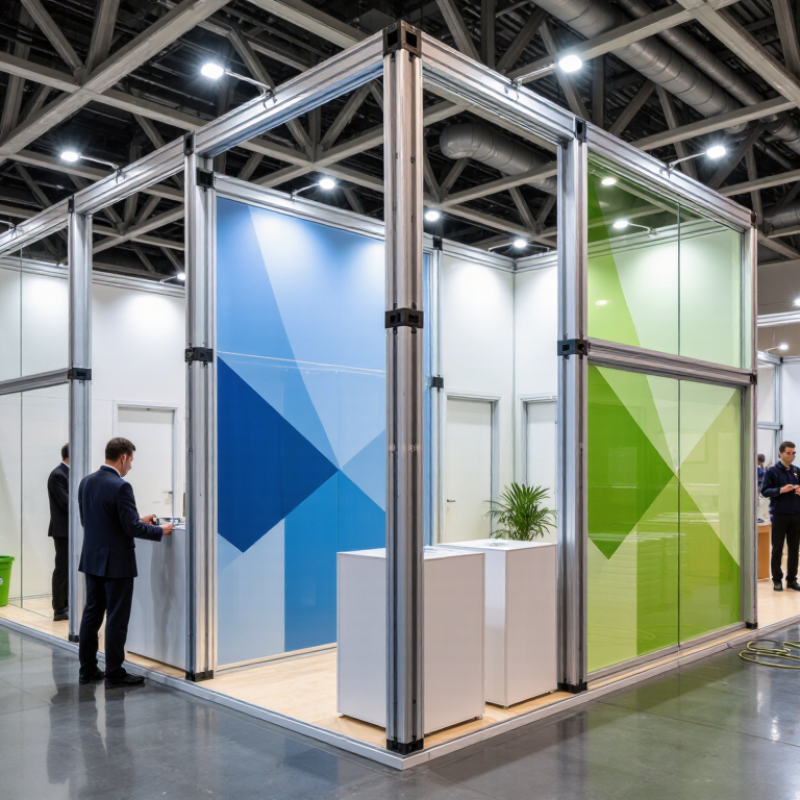
A standard exhibition stand supplier in China should deliver more than attractive drawings. The real standard is repeatable execution. It includes modular aluminum systems, flame-retardant panels, stable flooring, clear load limits, and accurate production drawings. UFI’s Global Exhibition Barometer 2024 reported that more than 60% of surveyed companies expected higher exhibition activity. This growth increases pressure on suppliers to control quality and delivery.
A reliable supplier should provide material specifications, structural calculations, packing lists, and installation schedules. It should also explain what happens when venue rules change. The Events Industry Council and Oxford Economics reported that business events generated 1.6 trillion US dollars in direct spending in 2019. That figure shows why small booth failures can affect larger commercial goals. Site coordination matters. So does waste control. Reusable frames and replaceable graphics can reduce repeated production costs.
A low quotation is not always a standard solution. It may exclude lighting, transport, storage, or on-site repairs. That is where buyers need careful questions. Ask for previous project records, safety documents, and a realistic production timeline. A supplier can pass every checklist and still communicate poorly during installation. That uncomfortable weakness deserves attention. Standardization is useful, but exhibitions are never perfectly standard. The best suppliers leave room for technical review, local venue conditions, and honest correction.
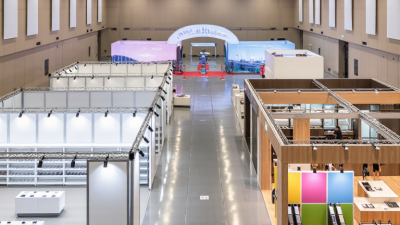
Standard exhibition stands are commonly built around modular booth footprints such as 3×3 m, 3×4 m, 3×6 m, and 6×6 m. A reliable supplier should be able to deliver these formats with reusable modular systems, compliant materials, clear technical drawings, consistent production quality, and on-site installation support. Exact booth sizes and regulations may vary by exhibition organizer.
Selecting China’s top exhibition stand supplier requires more than comparing catalog prices. UFI’s Global Economic Impact study estimates that exhibitions generated €299 billion in direct spending and supported 3.4 million jobs in 2023. This scale demands reliable execution. Check whether the supplier has handled similar booth sizes, venue rules, and compressed installation schedules. Ask for dated project photographs, material specifications, and client references. A polished 3D render is not proof of delivery.
Technical control matters. For a 3-by-6-metre standard stand, request a clear quotation covering wall panels, lighting, flooring, graphics, furniture, transport, installation, and dismantling. Confirm fire-retardant certificates, electrical drawings, structural limits, and on-site supervision. ISO 20121 provides a useful framework for sustainable event management, especially when suppliers offer reusable frames, recyclable graphics, and low-waste packaging. However, certification alone cannot replace practical inspection.
Look closely at communication. Can the project manager explain a late artwork change without hiding extra fees? Can the workshop provide a physical sample under normal lighting? These details reveal experience. The Global Association of the Exhibition Industry also identifies rising costs and operational uncertainty as continuing industry pressures. A low bid may become expensive after revisions.
No checklist is perfect. My own preference is to score suppliers on evidence, not promises, while leaving room to question assumptions before signing.
China Top 10 Exhibition Standard Stand Suppliers
Choosing among the top 10 China-based exhibition standard stand suppliers requires more than comparing online catalogs. Reliable suppliers should provide clear material specifications, structural drawings, production samples, and installation guidance. Aluminum frames, laminated panels, lighting units, counters, and storage furniture must fit the exhibition organizer’s rules. Experienced teams also explain lead times, packaging methods, and replacement procedures before receiving payment.
A practical comparison should examine factory capability, export experience, project photographs, and quality-control records. Ask whether the supplier checks panel dimensions and electrical connections before shipment. Request a detailed quotation with transport, assembly, printing, and revision costs separated. A low initial price may hide weak hardware or expensive last-minute changes. I would not treat any ranking as permanent. Supplier performance can vary by project, season, and local installation partner.
Tips: Send accurate booth dimensions and brand files early. Confirm fire-safety documents with the venue. Request a numbered packing list and assembly video. Keep one spare light and several connector parts. Small omissions matter. Also, inspect the final design at eye level, not only on a computer screen. A beautiful rendering can still create awkward visitor movement.
| Rank | Supplier Code | Primary Production Region | Standard Stand Formats | Typical Panel Specification | Customization Capability | Core Service Coverage | Typical Production Lead Time | Export Readiness |
|---|---|---|---|---|---|---|---|---|
| 1 | Supplier A | Guangdong | Shell Scheme Modular Booth | Commonly based on 1 m wide × 2.5 m high modular panels | Graphics, counters, shelves, lighting, flooring, and fascia options | Design, fabrication, printing, packing, and installation coordination | Approximately 10–20 working days after artwork approval | Export packing and documentation support available |
| 2 | Supplier B | Shanghai | Shell Scheme Portable Display | Aluminium frame systems with fabric or rigid infill panels | Logo panels, magnetic graphics, storage units, and rented furniture | Booth layout, production, logistics, and on-site assembly partners | Approximately 12–25 working days for standard projects | Suitable for domestic and overseas exhibition shipments |
| 3 | Supplier C | Jiangsu | Modular Stand Corner Booth | Reusable aluminium profiles with replaceable graphic surfaces | Moderate to high; supports branded walls, shelves, counters, and AV mounting | Concept drawings, structural detailing, manufacturing, and installation support | Approximately 15–25 working days | Reusable packing systems and container-loading experience |
| 4 | Supplier D | Zhejiang | Shell Scheme Backwall Display | Standard panels generally designed around 2.4–2.5 m overall height | Printed panels, header boards, product shelves, and reception desks | Artwork checking, production, packaging, and delivery coordination | Approximately 10–18 working days for repeatable systems | Experience with flat-pack export packaging |
| 5 | Supplier E | Fujian | Portable Booth Modular Stand | Lightweight frame structures with fabric, PVC, or laminated panels | Graphic replacement, lighting upgrades, counters, and brochure holders | Standardized design packages, production, and shipment preparation | Approximately 12–20 working days | Knock-down packaging suitable for courier or freight transport |
| 6 | Supplier F | Shandong | Shell Scheme Linear Booth | Aluminium extrusion frames with fabric or board infill options | Basic to moderate; suitable for graphics, counters, shelves, and lighting | Shop drawings, production, quality inspection, and packing | Approximately 15–22 working days | Can prepare commercial invoices, packing lists, and shipping marks |
| 7 | Supplier G | Hubei | Modular Booth Island Stand | Reusable frame systems commonly configured in 3 m × 3 m or larger layouts | Custom fascia, lockable storage, product displays, and integrated lighting | Design development, fabrication, logistics, and local contractor coordination | Approximately 18–30 working days | Overseas project coordination available through local partners |
| 8 | Supplier H | Anhui | Shell Scheme Fabric Display | Fabric graphics mounted on aluminium or tubular display frames | Graphic printing, LED lighting, shelving, counters, and monitor mounts | Artwork production, assembly testing, packing, and dispatch | Approximately 10–20 working days | Compact packaging helps reduce shipping volume |
| 9 | Supplier I | Hebei | Portable Stand Linear Booth | Standard lightweight panels and aluminium support components | Printed branding, display tables, brochure racks, and basic electrical accessories | Template-based design, manufacturing, packaging, and delivery support | Approximately 12–18 working days | Suitable for small and medium-volume export orders |
| 10 | Supplier J | Chongqing | Modular Stand Shell Scheme | Reusable aluminium systems with interchangeable graphics and accessories | Basic to moderate; supports counters, shelves, lights, and branded headers | Design adaptation, production, inspection, packing, and installation liaison | Approximately 15–25 working days | Export-oriented packing and freight coordination available |
China Top 10 Exhibition Standard Stand Suppliers: Services, Materials, and Customization Options Compared
Choosing among China’s top ten exhibition standard stand suppliers requires more than comparing quotations. UFI’s 2024 Global Exhibition Barometer reported that 54% of surveyed companies expected exhibition activity to increase. This growth raises demand for fast, reusable, and visually consistent booth systems. Reliable suppliers should provide floor-plan advice, 3D renderings, production schedules, installation, dismantling, and on-site support. Ask for documented project photos and material specifications. A polished portfolio is not enough.
Aluminum profiles remain popular because they are lightweight, reusable, and easy to transport. Fabric graphics offer clean surfaces and quick replacement. MDF panels support stronger shapes, counters, and storage, but they require better moisture protection. Suppliers should explain fire ratings, load limits, printing methods, and packaging details. The Global Association of the Exhibition Industry identifies sustainability and cost control as continuing industry priorities. Therefore, reusable frames and replaceable graphics can reduce waste across multiple events.
Customization usually includes lighting, shelving, reception counters, hanging signs, product displays, and branded colors. Advanced suppliers may add interactive screens or modular meeting rooms. However, complex features increase installation risk and electricity requirements. I have seen attractive concepts fail because cable routes were ignored. A practical supplier checks venue rules before production. The cheapest offer may not be efficient. Review lead time, revision limits, replacement policies, and installation supervision carefully. Some comparisons remain imperfect because supplier claims are difficult to verify independently.
Choosing among China’s top ten exhibition stand suppliers requires more than comparing attractive online portfolios. Start with your event goals, booth size, visitor flow, and installation deadline. A reliable supplier should explain material choices, production steps, transport arrangements, and on-site support clearly. Ask whether the company manages production directly or outsources key work. This difference can affect quality and accountability.
Request a detailed quotation, material samples, recent project photos, and references from similar events. Check the supplier’s experience with your venue’s height limits, electrical rules, fire-safety requirements, and loading procedures. Confirm the design revision process. Also, ask for a realistic production schedule with inspection points. Cheap pricing may hide weak hardware, rushed printing, or extra logistics fees.
Use technical drawings, measurements, color references, and written acceptance standards. A professional supplier should answer practical questions, not only promise fast delivery. Visit the workshop when possible. Look at storage conditions, cutting accuracy, finishing quality, and packing methods. Small details matter, such as labeled cartons and protected edges. Still, no supplier is perfect. Even an experienced team may misunderstand a late design change or underestimate venue delays. Keep a backup plan for urgent graphics, missing parts, and schedule changes. Reliability grows through documented communication, not confident words alone.