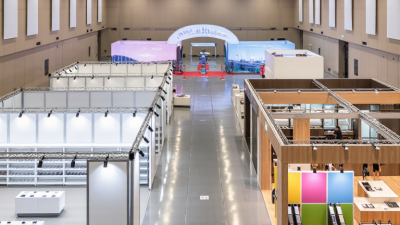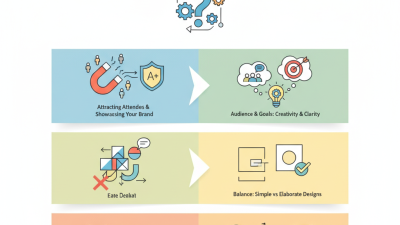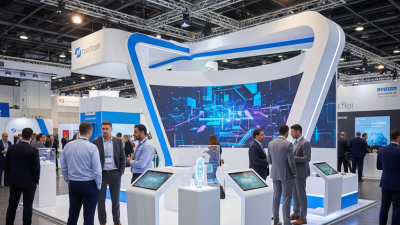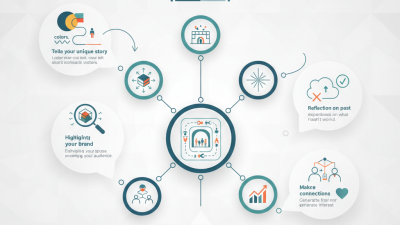
In 2026, a successful Exhibition Booth must do more than display products. It must help global buyers understand value within seconds. Buyers may arrive from different industries, languages, and purchasing cultures. Clear design reduces uncertainty. Reliable information builds confidence.
A practical booth begins with the visitor’s journey. Place the strongest product near the entrance. Use readable signs, realistic demonstrations, and samples visitors can safely handle. A screen showing production steps may explain more than a crowded brochure rack. Staff should answer technical questions accurately and avoid exaggerated promises. If an answer is unknown, say so, then provide a clear follow-up process.
Trust also depends on details beyond appearance. Product specifications should match sales materials. Pricing conditions, delivery capabilities, certifications, and service terms need careful review. Accessible layouts support visitors with different mobility needs. Energy-efficient lighting and reusable structures can show responsible planning without becoming empty decoration. Local venue rules and applicable international trade requirements must guide every decision.
No booth performs perfectly. A beautiful wall may attract attention but fail to create qualified conversations. A complex demonstration may impress engineers and confuse purchasing managers. Visitor feedback, lead quality, and unanswered questions reveal those weaknesses. Testing the layout with colleagues before the exhibition can expose awkward paths and missing information. Small corrections often matter more than expensive features.
This guide explains how to create an Exhibition Booth that feels credible, useful, and ready for global buyers. It connects visual strategy with practical execution. The goal is not instant admiration. It is informed interest, followed by a trustworthy business conversation.
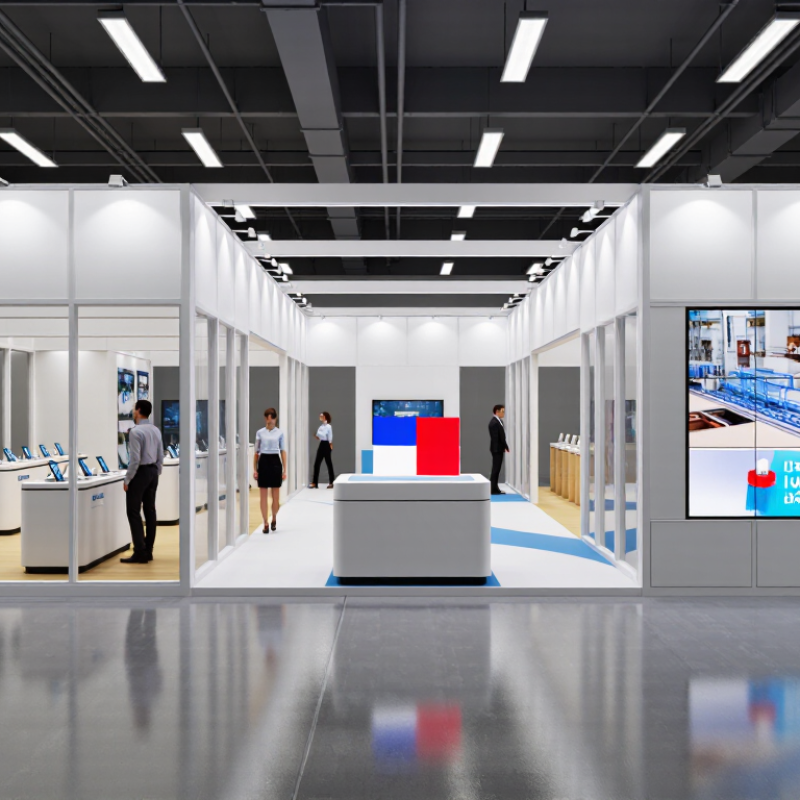
How to Create an Exhibition Booth for Global Buyers in 2026?
Define Global Buyer Segments with CEIR’s 81% Authority Benchmark
A global booth should not treat every visitor as one buyer type. CEIR’s 81% authority benchmark highlights the value of trusted, evidence-based segmentation. Use it as a planning reference, not a decorative statistic. Group visitors by industry, buying role, region, and purchase timing. A procurement manager may seek delivery data. An engineer may inspect materials and performance details. A distributor may ask about training and local support.
Build the booth around these real questions. Place clear product samples at eye level. Add a compact screen showing use cases, test methods, and service steps. Keep technical documents nearby, with plain-language versions for international visitors. Use visual icons carefully. Colors and symbols can carry different meanings across markets. Staff should know when to explain, when to listen, and when to involve a specialist.
Measure the space before the event. A narrow aisle can make an attractive display difficult to enter. That mistake is easy to overlook. Create two conversation zones: one open for quick questions, and one quieter for serious discussions. Record visitor needs without collecting unnecessary personal information. After each day, review which questions repeated and which displays confused people. The first layout may be wrong. That is useful evidence for the next revision.
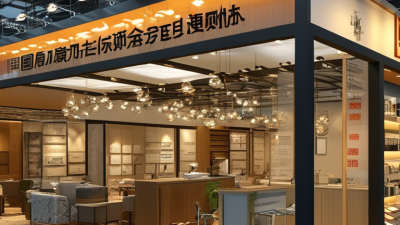
Define global buyer segments with CEIR’s 81% authority benchmark.
The benchmark indicates that 81% of exhibition attendees have buying authority or influence. Booths should therefore prioritize fast product qualification, clear business value, live demonstrations, and an easy next-step process for high-intent global buyers. The remaining 19% is calculated as the balance to 100%.
Source: CEIR authority benchmark referenced in the exhibition planning framework. The 19% value is mathematically calculated from the 81% benchmark.
UFI’s 115% revenue-recovery forecast should change how teams design exhibition booths in 2026. It is not permission to spend 15% more. It is a target-setting signal.
If 2019 comparable revenue was $100, set a $115 pipeline objective. Track qualified meetings, proposal value, conversion rate, and revenue per square metre. Keep these figures visible in a daily dashboard.
Design the booth around buyer decisions, not visual excess. Use a clear product wall, one working demonstration, and a private space for pricing discussions. Assign staff by market and language.
Record each visitor’s role, purchase timeline, and next action. A five-minute conversation needs a measurable outcome.
UFI’s Global Barometer links recovery expectations with stronger business confidence, but forecasts are not guarantees. Regional travel costs, currency shifts, and uneven demand can weaken results.
Our first draft often overvalues foot traffic. That is a mistake worth admitting. A crowded booth may produce weak commercial intent.
Test two layouts before the event, then compare meeting quality rather than visitor volume. Set a minimum follow-up time of 48 hours. Review missed leads weekly.
Some buyers may prefer a quiet consultation area, even when the booth looks less impressive. That trade-off needs evidence, not assumptions.
How to Create an Exhibition Booth for Global Buyers in 2026?
When 92% of attendees discover products through exploration, language becomes part of the booth experience. Buyers should understand your offer before speaking with staff. Create multilingual product zones with clear headings, short benefits, and visual demonstrations. Use local terms, not direct translations. The Common Sense Advisory report Can’t Read, Won’t Buy found that 75% of consumers prefer products in their own language. It also reported that 40% will not purchase in other languages. These figures make language design a commercial decision, not decoration.
Give each zone one job. A blue panel can explain technical specifications, while a nearby screen shows a simple use case. Add QR codes linking to translated catalogs, compliance documents, and contact forms. Keep fonts large enough to read from three meters away. Test every translation with a native-speaking reviewer. Machine translation may save time, but it can damage trust. I have seen “easy” wording become confusing after translation. That mistake is expensive.
Tips: Place the strongest product at eye level. Use two languages per panel, not six. Mark language paths with colored floor lines. Train staff to greet visitors in their preferred language. Record which zones attract questions, then adjust wording during the exhibition. Do not assume every buyer understands the same icons. Some symbols travel badly. A small local review can prevent a large misunderstanding.
| Booth Planning Dimension | Verified Data or Standard | Recommended 2026 Booth Application | Measurement Method |
|---|---|---|---|
| Discovery-led visitor experience | 92% of the target audience is identified as discovery-driven in the supplied brief. | Place a highly visible product overview, category map, and multilingual wayfinding at the booth entrance. | Count visitors who stop, scan a product code, or enter a product zone. |
| Core language coverage | The United Nations has six official languages: Arabic, Chinese, English, French, Russian, and Spanish. | Use English as the operational base and provide concise navigation, product labels, and QR landing pages in the six official UN languages when relevant to visitor markets. | Audit each visitor-facing touchpoint for language completeness and translation accuracy. |
| European market localization | The European Union recognizes 24 official languages. | Prioritize languages according to the registered visitor profile instead of displaying 24 languages on every sign; provide a digital language selector for the full set where needed. | Compare language selections in scans, meeting requests, and downloadable catalogues. |
| Product-zone structure | A booth can be organized around four buyer tasks: discover, compare, validate, and discuss. | Create four clearly marked zones: Discovery Wall, Comparison Table, Technical Proof Area, and Consultation Lounge. | Track dwell time and qualified conversations by zone. |
| Information hierarchy | Visitors scan exhibition environments before deciding where to engage. | Present information in this order: product category, primary benefit, technical proof, compliance details, and contact action. | Conduct a five-second comprehension test with representative buyers. |
| Readable multilingual signage | WCAG 2.2 recommends a minimum contrast ratio of 4.5:1 for normal-sized text and 3:1 for large text. | Use high-contrast text, short labels, generous spacing, and separate language blocks rather than dense paragraph layouts. | Check contrast with a WCAG contrast analyser and test signs from the main aisle. |
| Digital product access | QR codes can connect printed booth content to language-specific digital information without increasing sign density. | Assign one QR code to each product zone and route visitors to localized specifications, certifications, manuals, and enquiry forms. | Measure scans, language selection, document downloads, and completed forms. |
| Touchscreen accessibility | WCAG 2.2 specifies a minimum target size of 24 × 24 CSS pixels for pointer targets, with limited exceptions. | Make language buttons, product filters, and download controls at least 24 × 24 CSS pixels, with larger controls preferred for public displays. | Test every interactive element on the actual booth screen before opening. |
| Accessible circulation | The United States ADA Standards specify a 36-inch minimum clear width for an accessible walking surface in common conditions. | Maintain at least 36 inches of clear circulation where applicable, avoid narrow dead ends, and keep multilingual displays outside the main path. | Measure clear routes after furniture, samples, counters, and queues are installed. |
| Buyer qualification | A discovery visit becomes commercially useful when product interest, application, purchase timeline, and decision role are captured. | Use a short multilingual form with four required fields: application, product category, purchasing stage, and preferred follow-up language. | Calculate the percentage of leads containing all four qualification fields. |
| Post-show follow-up | A multilingual journey should continue after the visitor leaves the booth. | Send localized product summaries, technical files, and meeting confirmations according to the visitor’s selected language and buying stage. | Monitor delivery rate, document engagement, meeting conversion, and response time by language. |
A global buyer does not need a louder booth. They need a clear reason to stop. Start with the outcome, not the backdrop. Show one practical product application within five seconds. Use readable signs, strong lighting, and a demo table that stays uncluttered. A visitor should understand your offer before asking for help. The 4.5:1 event-ROI benchmark can guide planning, but it is not a promise. For every dollar spent, your event should aim to create 4.50 dollars in measurable return.
Build lead capture into the booth experience. Use a fast badge scan or QR form with permission-based follow-up. Ask only useful questions: market, application, purchasing timeline, and preferred contact method. Keep the form short. Long forms lose serious buyers. Give each lead a clear score and next action, such as technical review, sample request, or sales meeting. Record the campaign source, staff member, and follow-up date. These details make later revenue easier to verify.
Our first booth plan once focused too heavily on appearance. It attracted traffic, but many conversations ended without a usable contact. That was a costly lesson. Now, staff rehearse a 20-second opening and log notes immediately after each discussion. We also compare qualified leads, sales opportunities, and closed revenue against total event costs. Some results appear months later, so early reporting can mislead. Review the numbers again after 30, 60, and 90 days. Ask what failed. Improve the next booth accordingly.
A global exhibition booth should attract attention, but attention alone proves very little. In 2026, teams need to measure buyer quality, conversion, and cost per lead after the show. A crowded booth can still produce weak commercial results.
Define a qualified buyer before the event. Use practical signals: purchasing authority, product fit, project timing, budget range, and target market. Train booth staff to record these details consistently on tablets. Ask short questions near the demonstration area. “What are you planning to buy?” works better than a vague greeting. Our first scoring model was too generous. Almost every visitor looked promising. That mistake inflated the lead count.
After the show, compare qualified leads with meetings, quotations, and closed opportunities. For example, 240 scanned visitors may become 64 qualified buyers, 18 sales meetings, and four serious opportunities. Calculate cost per lead by dividing total booth spending by qualified leads, not by every scan. Include construction, travel, staffing, samples, and follow-up labor. A $30,000 booth with 60 qualified leads costs $500 per qualified lead. Track results by staff member and visitor segment, while protecting personal data under applicable requirements.
Review the numbers after 30, 60, and 90 days. Some buyers need technical approval before requesting a quotation. Do not judge the booth too quickly. Still, question unexplained gaps. If many visitors accepted samples but ignored follow-up, the display may have promised more than the sales process delivered. Adjust the next layout, questions, and staffing plan based on evidence, not applause.