Choosing the right booth begins with understanding buyer behavior, not copying fashionable designs. Trade Show Exhibition Stands now serve as meeting rooms, product theatres, data points, and trust signals. Global buyers often judge a brand within seconds, while their final decision may depend on conversations, demonstrations, and follow-up quality.
Industry research supports this shift. UFI’s Global Exhibition Barometer has tracked the continued recovery and strategic importance of exhibitions across international markets. Its findings show that exhibitions remain valuable channels for business connections, market visibility, and customer engagement. CEIR research on face-to-face marketing also highlights the importance of qualified leads, live product experiences, and measurable exhibitor outcomes. Freeman’s Trends Reports similarly emphasize that audiences increasingly expect useful, human, and memorable event experiences.
That changes how stand types should be compared. A modular stand may reduce shipping complexity. A custom island stand can create stronger visual authority. A compact inline stand may work better when budget and footprint matter. The best choice depends on objectives, audience movement, venue rules, transport plans, and available staff.
No stand is perfect.
A dramatic structure can still produce weak leads. A simple counter can outperform it when the team is prepared. This guide examines ten practical exhibition stand types for global buyers, including their strengths, limitations, visual impact, and suitability for different trade show environments. Some recommendations may require adjustment; regional expectations and buyer habits are never identical.
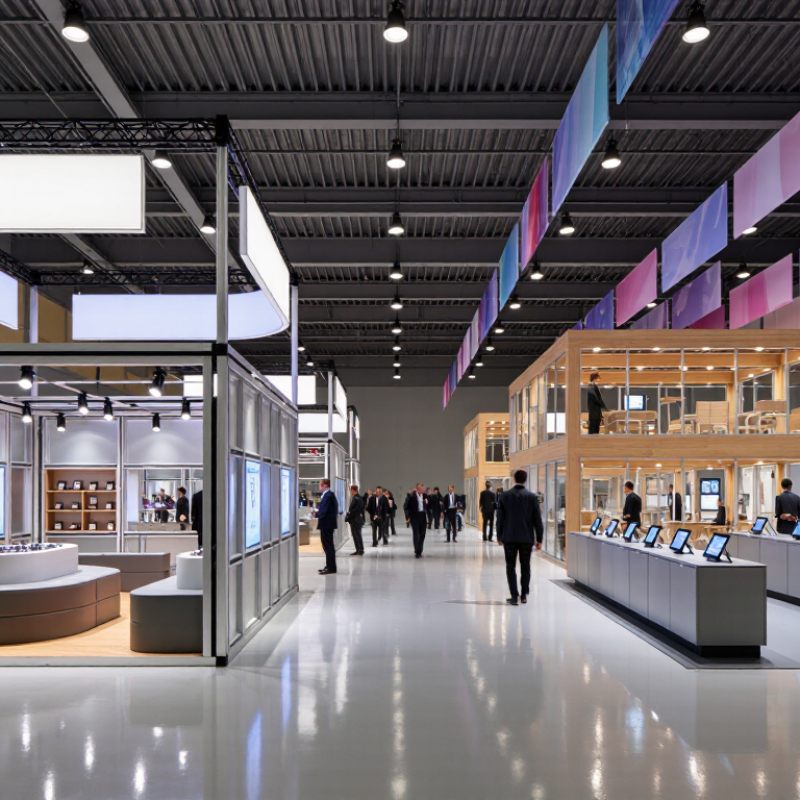
When global buyers compare exhibition stand types, the first test is not appearance. It is fit. A portable pop-up suits frequent regional events, while a custom island stand supports stronger storytelling in a large hall. Compare usable floor area, visitor capacity, and setup time together. A beautiful design can fail if two sales conversations block the aisle.
Cost requires more than the construction quote. Assess transport, storage, installation labor, electrical services, flooring, graphics, and dismantling. Modular systems often reduce repeat-event costs, but their joints, lighting, and panels need careful inspection. For a fair comparison, calculate the cost per event across three years. Check whether the structure can be resized for inline, corner, or peninsula spaces. Small detail, major impact.
Professional buyers should also score visitor flow, accessibility, fire safety, material durability, and lead-capture privacy. Ask for load ratings, material specifications, maintenance guidance, and a realistic production schedule. These documents reveal more than polished renderings. In practice, scoring sheets are useful, but not perfect; they can undervalue cultural preferences or an unexpectedly noisy venue. Review the criteria after each show, using photos, visitor counts, and staff feedback. Reliable decisions come from evidence, not only visual excitement.

Portable, pop-up, and modular exhibition stands remain practical choices for international trade shows. A portable stand uses lightweight frames, carry cases, and fabric graphics. It suits teams that travel frequently and need quick setup. Pop-up displays open like an accordion and create a clean backdrop within minutes. They work well in smaller booths or short campaigns.
Modular stands offer greater flexibility. Their aluminum frames can support shelves, counters, lighting, product screens, and storage areas. Buyers can reconfigure the same structure for different booth sizes. Other useful types include banner stands, tension-fabric walls, hanging signs, island exhibits, corner booths, inline displays, and custom hybrid stands. Each option should match visitor flow, product weight, venue rules, and transport limits.
Details matter. Check flame-retardant documentation, electrical safety, structural load ratings, and accessibility requirements before ordering. An experienced exhibition contractor should provide drawings, packing dimensions, setup instructions, and replacement plans. I have seen teams choose attractive displays that became difficult to carry through crowded airports. That mistake is expensive. Portable does not always mean durable, and modular does not always mean simple. Test one full assembly before the event. Measure the packed cases, not only the finished booth. Small oversights can affect labor, storage, and delivery costs.
Custom exhibition stands help global buyers communicate with clarity. Their layouts can reflect product categories, visitor behavior, and regional expectations. A product demonstration may need a quiet counter, while a technical display needs brighter lighting and stronger flooring. Experienced contractors also check loading limits, fire routes, ceiling heights, and venue regulations before production begins. Beautiful drawings are not enough.
Island stands attract visitors from four open sides. They work well for product launches, hospitality zones, and interactive demonstrations. Clear sightlines matter. Place tall structures toward the center, not across the aisle. Open corners also improve movement and reduce crowding. Still, island designs often require more flooring, lighting, and staffing. That extra space can become wasted space without a visitor plan.
Double-decker stands add meeting rooms and storage above the main floor. They suit exhibitors with limited footprints and many private discussions. Stair placement, guardrails, load calculations, and accessibility requirements need professional review. The upper level should not feel hidden. Use visible graphics and a welcoming staircase. A small mistake can affect safety, budget, or visitor confidence. Even strong concepts need revision after a real venue inspection. We have seen attractive layouts lose impact when storage doors opened into busy paths. Practical testing matters more than perfect renders.
For global buyers, exhibition stand selection often begins with floor position, not decoration. Inline stands sit between neighboring exhibitors and usually offer efficient setup costs. They suit focused product displays, private meetings, and compact storage. Place the reception desk near the aisle. Keep tall structures at the rear. A narrow frontage can still make conversations feel crowded. That detail is easy to miss.
Peninsula stands open on three sides, creating stronger visitor access and better product visibility. They work well for demonstrations that need movement around the display. Corner stands provide two open faces and can guide traffic from different aisles. Use directional graphics carefully. Otherwise, visitors may not understand where to enter. More open sides do not always guarantee better engagement. Staff can block the flow.
Outdoor stands require tougher planning. Wind, rain, uneven ground, and changing light can affect visitor comfort. Use secure flooring, weather-resistant materials, stable anchors, and covered meeting areas. Confirm venue rules for height, electrical systems, fire resistance, and accessibility. Requirements vary across countries. Translated safety documents may also reduce delays. I still leave more empty space than instinct suggests. It can feel inefficient. Yet visitors often stay longer when movement feels natural. Test the layout on paper before production.
Top 10 Trade Show Exhibition Stand Types for Global Buyers
Selecting an Exhibition Stand for Global Markets
Choosing an exhibition stand for global markets requires more than attractive graphics. Your stand must travel well, fit different venues, and support local visitor expectations. Modular stands offer reusable frames and flexible layouts. Custom stands create stronger visual impact but may increase shipping, storage, and installation costs. Portable systems suit smaller teams and frequent international events.
In my experience, the best choice depends on sales goals, audience size, and operational capacity. A hospitality-focused stand needs comfortable seating and discreet storage. A demonstration stand needs safe power access, clear viewing angles, and reliable lighting. Open layouts invite traffic, while enclosed spaces support private discussions. Some buyers prefer sustainable materials, but recycled components can still require careful maintenance. That detail is often overlooked.
Tips: Confirm venue rules before production. Check ceiling heights, electrical standards, fire-safety requirements, and accessibility needs in every target market. Request accurate packing dimensions and installation instructions. Use multilingual graphics only when translations are professionally reviewed. Keep essential messages visible from the aisle. Test screens, lights, and product displays before shipping. A small backup kit can prevent an expensive delay.
Not every impressive stand performs well. I have seen beautiful structures become crowded and difficult to navigate. Review visitor movement after each event. Measure conversations, demonstrations, qualified leads, and setup time. Then adjust the design. Global buyers value consistency, but local relevance still matters. A practical stand often earns more trust than a complicated one.