Inquiry
Form loading...

2026 Best Exhibition Design Stand Ideas for Global Buyers

In 2026, global buyers will expect more than an attractive booth. They will look for clear value, credible expertise, and an experience that respects their time. A strong Exhibition Design Stand should explain a company within seconds. Its message must remain visible from the busy aisle. Its layout should guide visitors naturally, without forcing them through crowded product displays.

Trade-show strategist Steve Miller describes the purpose clearly: “Your exhibit is a marketing tool, not a storage room.” This principle still matters when planning international exhibitions. A practical stand might use one bold message, a working product demonstration, and a quiet meeting table. Warm lighting can reveal materials honestly. Touchscreens can support conversations, rather than replace them. Staff training matters just as much as the floor plan.

The best ideas often connect visual design with measurable buyer needs. Modular structures can reduce waste and simplify transport across markets. Accessible paths can welcome more visitors. Private areas can protect sensitive business discussions. Digital screens should load quickly, even when venue networks perform poorly. Small failures become visible quickly.

Not every concept will work.

Some designs look impressive online but feel confusing in person. A reflection stage is necessary. Does the stand attract the right audience, or only create traffic? Does it help buyers remember the offer after leaving? The strongest Exhibition Design Stand combines memorable form, useful content, reliable execution, and honest evaluation. For global buyers, confidence is often built through these quiet details.
2026 Best Exhibition Design Stand Ideas for Global Buyers

What Makes an Exhibition Stand Effective for Global Buyers in 2026

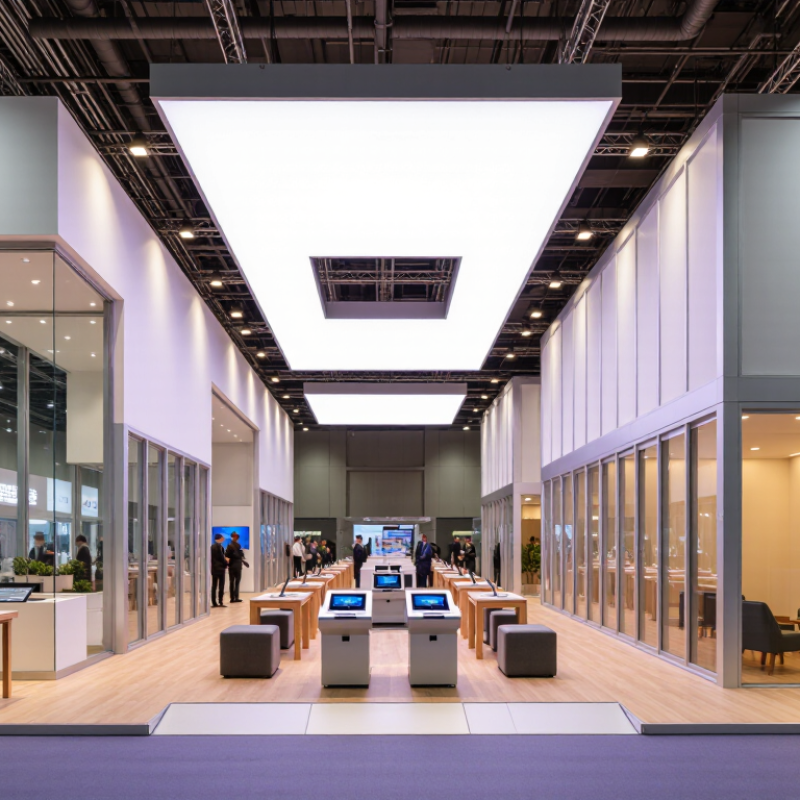
In 2026, an effective exhibition stand must help global buyers understand value within seconds. Clear zoning guides visitors from problem to proof, without forcing them through a scripted sales path.

A visible demonstration works better than a wall of claims. Show, do not claim. Use large, readable text, strong contrast, and simple symbols that remain clear across languages. Digital screens can offer translated specifications, but human assistance still matters when questions become technical.

Staff need product training, cultural awareness, and permission to say, “I need to check that.”

Trust grows when the stand makes evidence easy to inspect. Display test results, material sources, warranty limits, and relevant compliance documents in plain language. Buyers should see how data is collected and protected during lead capture.

A quiet meeting area supports serious conversations, while an open counter welcomes shorter visits. Practical details matter: reachable screens, seating for different body types, step-free access, and lighting that does not distort product colors. These choices signal experience, not decoration.

Effective design also respects time and environmental expectations. QR codes can provide technical files before or after a conversation, reducing printed waste and repeated explanations. Modular structures allow reuse across cities, although reused elements may look less polished than custom builds. That is a real trade-off.

A stand can still feel premium through careful lighting, clean graphics, and consistent staff behavior. Measure success through qualified conversations, content downloads, follow-up rates, and visitor feedback, not footfall alone. Review what confused visitors. Improve it before the next show.
How to Define Stand Goals, Audiences, and International Market Priorities

An exhibition stand should begin with a business goal, not a decorative theme. Define the desired action: qualified meetings, product trials, distributor inquiries, or market education. Each goal needs a visible measure, such as 30 scheduled conversations or 100 scanned leads. In my event planning experience, teams often choose colors before defining visitors. That order creates attractive spaces with weak commercial purpose. A clear goal keeps the layout, staffing, and message aligned.

Audience research should guide every design decision. A technical buyer may need a quiet consultation table, while a first-time visitor may prefer a short demonstration. Do not assume one message travels well. International priorities should reflect buyer demand, language needs, entry costs, shipping complexity, and follow-up capacity.

A smaller regional event can outperform a famous global show when its visitors match the sales plan. Still, this comparison is imperfect. Attendance figures rarely reveal lead quality. Review past lead notes, consult local professionals, and test key terms with native speakers.

Tips: Create separate zones for welcome, demonstration, and private discussion. Use clear diagrams and readable text from several steps away. Train staff to ask, “What brings you here?” before presenting solutions. Track conversations by market and buyer role. Leave space for quiet reflection; crowded designs can reduce trust. Do not overfill the stand. Less may communicate more.

How to Plan Visitor Flow, Product Zones, and Interactive Experiences

In 2026, exhibition stands must guide visitors, not merely display products. Freeman’s 2024 Trends Report found that 95% of attendees feel more connected through in-person events. This supports a human-centered layout. Place a clear welcome point near the aisle. Use wide paths, visible sightlines, and gentle turns. Avoid creating a crowded entrance.

Divide the stand into practical product zones. Start with a fast discovery area, then lead qualified visitors toward demonstrations and consultation tables. Each zone should answer one question. What is it? Why does it matter? What should visitors do next?

The Global Association of the Exhibition Industry continues to report strong global exhibition activity, but traffic quality varies by event. Design for purposeful movement, not maximum noise. Some layouts look impressive but confuse visitors. That is worth reconsidering.

Tips:

  • Keep primary aisles about three metres wide where space allows.
  • Use floor graphics sparingly.
  • Put complex products beside working samples, not long text panels.
  • Add one interactive experience, such as a live configuration screen or timed product challenge.
  • Record dwell time and zone entry counts with privacy-conscious tools.
  • Freeman research also reports that 87% of attendees are more likely to trust a company after meeting in person.
  • Train staff to ask one useful question before giving a full explanation.
  • Keep waiting areas visible but slightly separated.
  • Test the route with someone unfamiliar with your products.
  • If they hesitate, the design still needs work.

How to Select Sustainable Materials, Smart Technology, and Modular Structures

For 2026 exhibition stands, material selection should begin with the next event, not the opening day. Choose recycled aluminum, certified timber, and low-emission fabrics where possible. Ask suppliers for recycled-content data, safety documents, and end-of-life plans. Local sourcing can reduce transport impacts and simplify replacement. A lighter stand also lowers shipping costs. That matters to global buyers.

Smart technology should support conversations, not distract from them. Use motion sensors to reduce lighting during quiet periods. Set digital displays to readable brightness, especially in bright halls. Lead-capture systems must request clear consent and protect visitor information. Always prepare printed product sheets and offline demonstrations. Technology fails sometimes. I have seen impressive screens become useless after a simple network problem.

Modular structures offer practical flexibility across different venues. Select frames with standard parts, tool-light assembly, and adjustable graphics. A 3-by-3-meter layout might become a larger corner stand with extra panels. Check load limits, fire-safety requirements, accessibility, and local installation rules before production. Reusable crates can protect components between events. Yet modularity can look repetitive if every layout stays unchanged. Add movable lighting, tactile samples, or a small consultation table to create a more human space. The strongest design leaves room for repair, reuse, and honest improvement.

How to Measure Stand Performance and Improve Future Exhibition Results

A strong exhibition stand should attract attention, but attention alone does not prove performance. Measure results against clear targets before the event begins. Track qualified conversations, product demonstrations, visitor dwell time, meeting requests, and follow-up consent. A simple floor plan can reveal which areas receive genuine engagement.

Use the same measurement method across each exhibition. Record visitor counts during busy and quiet periods. Ask staff to mark lead quality immediately after each conversation. A practical rating can include need, budget, timing, and decision authority. Review cost per qualified lead, not only total visitor numbers. Numbers can mislead.

Follow-up data often exposes the real outcome. Compare contacted leads, replies, scheduled meetings, and confirmed opportunities after seven, thirty, and ninety days. A short visitor survey can explain why people stopped, hesitated, or left. Small details matter, such as unclear product messages, poor lighting, or a crowded demonstration area. We once treated high footfall as success, yet few visitors reached the consultation desk. The stand looked active, but the layout created friction. That mistake showed why visual appeal must connect with measurable business action. Adjust one element at a time, then compare results at the next event. Keep honest notes, including weak performances and unexpected visitor questions.