Inquiry
Form loading...

How to Choose the Best Exhibition Displays in 2026?

Choosing the right Exhibition Displays in 2026 is less about building the biggest stand and more about helping visitors understand your offer quickly. Picture a crowded aisle, bright overhead lights, and someone pausing for only a few seconds. Your message, graphics, and layout must work together in that brief moment.

Architect and pavilion designer Ludwig Mies van der Rohe is widely associated with the phrase, “Less is more.” It remains a useful design principle for exhibition spaces: a clear headline, focused product lighting, and an uncluttered counter can guide attention better than a wall of competing messages. But simplicity is not a shortcut. A display still needs sturdy materials, practical storage, accessible routes, and lighting that renders colors accurately.

This guide explores how to choose Exhibition Displays that fit your goals, venue, budget, and team. It covers modular and custom options, graphic systems, portability, sustainability, and the details that shape visitor experience. We’ll look at measurable needs, such as footprint and setup time, alongside less certain judgments, such as whether a layout feels welcoming. That part deserves honest review; a design that looks striking in a rendering can feel cramped once cases, cables, and people arrive.

Use the recommendations as a decision framework, not a promise that one format suits every brand. Start with what visitors should notice, then test the design against real constraints. A small mock-up can reveal awkward sightlines before production begins. Sometimes, the first idea needs changing.
How to Choose the Best Exhibition Displays in 2026?

Define Exhibition Goals, Audience, and Venue Requirements

How to Choose the Best Exhibition Displays in 2026?
Define Exhibition Goals, Audience, and Venue Requirements

Start with the result you need: product demonstrations, qualified leads, or stronger brand recall. Each goal calls for a different display. A hands-on demo needs clear viewing space and room for visitors to pause. A lead-generation stand needs an obvious welcome point and a quieter place to talk. Freeman’s 2024 Attendee Trends Report found that 74% of attendees consider in-person events the best way to discover new products. Make discovery easy. Place your main product where people can see it from the aisle, not behind a counter. Keep it simple.

Define your audience before choosing graphics, seating, or technology. Technical buyers may want detailed specifications and a working demonstration; first-time visitors may need plain-language explanations. Then confirm the venue’s floor dimensions, ceiling height, power access, lighting, loading times, and restrictions on suspended elements. Ask about visitor flow and neighboring stands, too. A display that looks generous on screen can feel cramped beside a busy aisle. Measure twice. I have seen carefully planned layouts lose useful space to cases, cables, and queues. That is easy to overlook. Sketch the visitor route, mark staff positions, and test whether two people can stop without blocking others. Use the venue plan, not assumptions, to finalize the design.
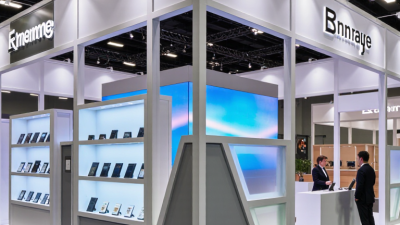
Compare Display Types, Sizes, and Layout Options

Choosing an exhibition display starts with the job it must do. A portable pop-up suits a compact booth and quick setup; modular frames allow wider configurations as space changes. Custom-built structures can create stronger visual impact, but they need more planning, transport space, and budget. Small can work. Match the format to your goals, staff count, and venue rules, not just the most impressive photograph.

Size affects how visitors move. For a 10-by-10-foot booth, keep the entrance open and place one clear product demonstration near the front. A 10-by-20-foot space can support a meeting table without blocking the main route. CEIR’s 2023 Index reported exhibition industry performance at 84.2% of 2019 levels, underlining why flexible investment may matter when show plans shift. That figure is industry-wide, not a forecast for any single exhibitor. Layout still needs testing. Sketch visitor paths, allow room for queues, and check sightlines from the aisle. I’d avoid filling every wall; even a useful display can feel crowded when people cannot pause comfortably. Walk the plan at full scale before ordering graphics.

How to Choose the Best Exhibition Displays in 2026? — Compare Display Types, Sizes, and Layout Options

Display Type Typical Size or Footprint Best For Layout Options Setup and Transport Key Considerations
Retractable Banner Stand About 0.8–1.2 m wide × 2–2.3 m high (2.6–4 ft × 6.5–7.5 ft) Small booths, entrances, product highlights, and supporting graphics One stand beside a counter; multiple stands arranged in a row or shallow curve Usually quick to assemble; graphic and support pole store in a compact base Affordable and portable, but offers limited width and can be less stable in busy areas.
Pop-Up Fabric or Panel Display Common widths are about 2.3–3 m (7.5–10 ft); height is typically around 2.2–2.4 m (7–8 ft) Small to medium inline booths that need a broad backdrop Straight wall, shallow curve, or backdrop paired with side graphics Designed for repeated setup; carrying cases and assembly time vary by system Check the finished width, graphic joins, lighting options, and whether the booth rules allow the display height.
Modular Frame Display Often configured in sections about 0.9–1.2 m (3–4 ft) wide; total size is customizable Exhibitors who reuse a display across different booth sizes Straight, L-shaped, U-shaped, or segmented wall layouts More components than a banner stand; transport and assembly depend on frame materials and configuration Flexible and expandable. Confirm the component list, storage requirements, and compatibility of graphics between configurations.
Tabletop Display Commonly about 0.6–1.2 m wide (2–4 ft), sized to sit on a standard event table Tabletop events, compact spaces, demonstrations, and registration areas Centered behind the table, with products or literature arranged in front Generally lightweight and easy to carry; often packs into a small case Keep important text at viewing height and leave enough clear table space for staff and visitor interaction.
Fabric Tension-Fabric Backwall Common widths range from about 2.4–6 m (8–20 ft), with height often around 2.3–3 m (7.5–10 ft) Medium to large booths needing a seamless-looking graphic wall Straight backwall, curved backdrop, or paired walls around a presentation area Frame sections and fabric pack separately; larger configurations take more time and space to transport Verify graphic dimensions, fabric tension, lighting conditions, and permitted height before ordering.
Hanging Sign Size varies widely; circular or square signs commonly span roughly 1.5–4 m (5–13 ft) Island booths and large spaces where long-distance visibility matters Suspended circle, square, triangle, or custom shape above the booth Requires advance planning, rigging approval, and venue installation Not suitable for every booth. Check ceiling height, rigging deadlines, load limits, and event regulations.
Lightbox Display Single sections are often about 0.9–1.2 m (3–4 ft) wide; multiple sections can form a larger wall Product-focused booths, darker venues, and graphics that benefit from even illumination Single illuminated panel, continuous backwall, or illuminated product zone Requires power; packing, frame weight, and assembly vary with size and construction Confirm power access, cable routing, brightness, and whether the display can be used in the venue’s lighting conditions.
Display Counter or Podium Commonly about 0.8–1.2 m wide × 0.9–1.1 m high (2.5–4 ft × 3–3.5 ft) Lead capture, product demonstrations, welcome points, and storage Placed at the booth entrance, alongside a backwall, or near a demonstration area Portable models may fold or pack flat; rigid counters can require more transport space Check counter height, internal storage, work surface, and access to power if devices will be used.
Planning note: Dimensions are typical planning ranges, not universal specifications. Available sizes vary by display system. Before selecting a configuration, confirm the booth footprint, venue height limits, access to power, fire and safety requirements, and the event organizer’s rules.

Assess Materials, Portability, Durability, and Sustainability

How to Choose the Best Exhibition Displays in 2026?

Materials affect appearance, handling, and upkeep. Taut fabric can reduce glare under bright hall lighting, while rigid panels create crisp graphics but may show scratches. Aluminum frames are light and generally resist corrosion; check joints and edge finishes, not just the frame itself. A low price can hide costly replacement parts.

Portability matters when displays travel between venues. Check the packed dimensions against your vehicle and storage space, then lift the case yourself if possible. A wheeled case helps across long corridors, but small wheels can struggle over floor seams. Ask how quickly one person can assemble the structure. Test it. Repeated setup can loosen connectors, so inspect hinges, feet, and fabric tension before each event. I have found that a display that looks simple in a product photo can take longer to pack than expected.

Sustainability claims deserve practical questions. Can graphics be replaced without discarding the frame? Are damaged components available separately? Reusable systems can reduce waste when they suit your changing layouts, but shipping heavy cases long distances may offset some gains. Request material details and care instructions, then consider how many events the display is likely to serve. Sometimes, the greener choice is the one your team will actually maintain.

Evaluate Technology, Customization, and Total Cost

Choosing exhibition displays in 2026 means looking beyond screen size and visual impact. Check how technology performs in the actual venue. A bright display may look sharp in a showroom but wash out under overhead lights. Test it live. Confirm that cables, media players, and presentation software work together before the event. Ask who handles setup and troubleshooting, and whether replacement parts are easy to source. A feature-rich system can become a burden if staff cannot operate it confidently.


Customization should fit both your message and your event routine. Measure the booth, doorways, and storage space before approving a design. Modular panels can adapt to different layouts, while custom shapes may create a stronger focal point but take longer to assemble. Request clear drawings and a written list of included components. Small details matter: a counter placed too close to a screen can block the view. Plans can still miss things.


Compare total cost, not just the quoted purchase price. Include shipping, installation, graphics, software, maintenance, storage, and staff time. Rental may suit a one-off event; ownership can make sense when displays are reused often. Ask for a realistic service-life estimate and clarify which repairs are excluded. I would still leave room in the budget for one unexpected expense. That is not perfect planning, but event schedules rarely leave much room for last-minute fixes.

Check Supplier Quality, Safety Standards, and Setup Logistics

Choosing exhibition displays in 2026 means checking more than appearance. Ask suppliers for material specifications, load limits, warranty terms, and references for similar projects. UFI’s 34th Global Exhibition Barometer, published in January 2024, reported that surveyed companies expected 2024 exhibition-industry revenues to reach 115% of 2019 levels. That points to renewed activity, but it does not guarantee a supplier can meet your schedule. A polished render can still hide weak connectors or unclear packing instructions.

Request assembly instructions and confirm who handles delivery, installation, and dismantling. Check that cables can be routed safely, frames feel stable, and heavy parts have clear handling guidance. Ask the venue or organizer which safety requirements apply; they can vary by location and event. Small details matter. A rushed setup can expose problems that looked invisible in a showroom.

Tips: Ask for a sample joint or frame section before approving a full build. Photograph packed components during a trial setup, then record assembly time and tools needed. Test it. If the display takes longer to assemble than the supplier claims, revisit the plan before booking labor.

How to Choose Exhibition Displays in 2026

Compare the number of practical checks in each key area before choosing a display.

How to use this: Verify supplier specifications, inspect a sample where possible, and confirm applicable fire, electrical, and stability requirements with the venue or local authority. Before ordering, check packed dimensions, included components, installation needs, and setup timing. The values count the verification points listed here; they are not market statistics.