Best Display Stand Options for Global Buyers in 2026?
In 2026, the demand for effective display stand solutions will rise. Global buyers seek options that combine functionality and aesthetics. Whether for trade shows, retail spaces, or events, display stands play a crucial role. They enhance product visibility and draw customer attention.
Yet, choosing the right display stand can be challenging. With so many types available, buyers may feel overwhelmed. Factors like material, size, and design significantly influence decision-making. Understanding these elements is essential for making informed choices. Not all display stands meet the unique needs of every business.
This guide will explore various display stand options. It aims to provide insight into popular choices on the market. Buyers need to consider their branding, target audience, and event type. Finding the perfect display stand is not just about aesthetics; it’s about practical effectiveness. As the landscape evolves, reflecting on past trends will help in making better future choices.

Best Display Stand Options for Global Buyers in 2026
With the rise of e-commerce, effective display stands are vital for retail success. A recent report by MarketsandMarkets predicts a 5.5% annual growth in the global point-of-purchase display market by 2026. This emphasizes the need for innovative display solutions that not only attract customers but also enhance brand visibility.
When considering display stands, durability and functionality are key. Cardboard displays are popular due to their lightweight nature and lower cost. However, they may lack longevity compared to metal or wood options. Buyers must weigh aesthetics against practicality, as a visually appealing stand isn’t effective if it quickly deteriorates.
**Tips**: Choose designs that suit your product's visibility without overwhelming the space. Experiment with modular designs that adapt to change. Consider sustainable materials, as consumers are more environmentally conscious. The future of display solutions may involve technology like digital screens, yet basic designs still hold value in ensuring clear communication of product information. Reflect on the balance between modern innovation and traditional effectiveness when planning your displays.
Key Factors to Consider When Choosing a Display Stand
When selecting a display stand, several key factors come into play. The material is paramount. Stands made from metal, wood, or high-quality plastic offer different aesthetics and durability levels. A recent industry report suggests that 47% of buyers prioritize material strength, which impacts long-term usage and visibility.
Size and adjustability are also critical. The ability to adapt displays to various product dimensions can enhance versatility. According to studies, displays that can accommodate different sizes see a 30% higher engagement rate. Buyers need to assess the space available. An overly large stand can clutter a retail area, while a small stand may go unnoticed.
Lastly, consider the design's aesthetics. A visually appealing stand attracts customers. According to market research, around 65% of consumers are influenced by the design when making purchasing decisions. This highlights the need for a balance between functionality and style. Reflect on your specific needs and priorities to make an informed decision.
Types of Display Stands: Comparing Functionality and Design
When considering display stands, functionality and design are paramount. Each type serves unique purposes. Pop-up displays are portable and user-friendly. They provide excellent versatility for various events. In contrast, digital displays offer a modern touch. They captivate audiences with dynamic content. According to industry reports, digital displays can increase engagement by up to 400%.
Wooden and acrylic options are prevalent for many buyers. Wooden stands convey a classic feel. They are robust and ideal for trade shows. Acrylic stands, known for their sleek design, are lightweight. However, they may lack the same durability as wood. This could be a concern for long-term use.
Combining style and function is crucial. Customization options allow businesses to reflect their brand identity. However, over-customization can lead to increased costs and delays. It’s essential to strike a balance. Buyers should consider their specific needs and budget constraints. Adapting display stands to changing market trends is vital for staying relevant.
Materials Used in Display Stands: Pros and Cons
When considering display stands, material choice plays a crucial role.
Wood is popular for its natural aesthetics. It provides warmth but can be heavy. Over time, wood may warp or splinter, requiring maintenance.
Metal, on the other hand, offers durability and strength. It withstands outdoor conditions but can be prone to rust and scratches if not treated.
Plastic display stands are lightweight and versatile. They come in various colors and designs, making them visually appealing for events. However, plastic can become brittle over time and may not support heavy items effectively.
Cardboard offers an eco-friendly option, ideal for temporary displays. It’s inexpensive but lacks the sturdiness needed for long-term use.
Educating buyers about these materials is vital. Each option has its drawbacks and benefits. The decision should align with the display’s purpose and duration. Understanding these factors allows for better choices. Manufacturers must consider the environment and functionality to enhance customer satisfaction and sustainability.
Emerging Trends in Display Stand Design for 2026
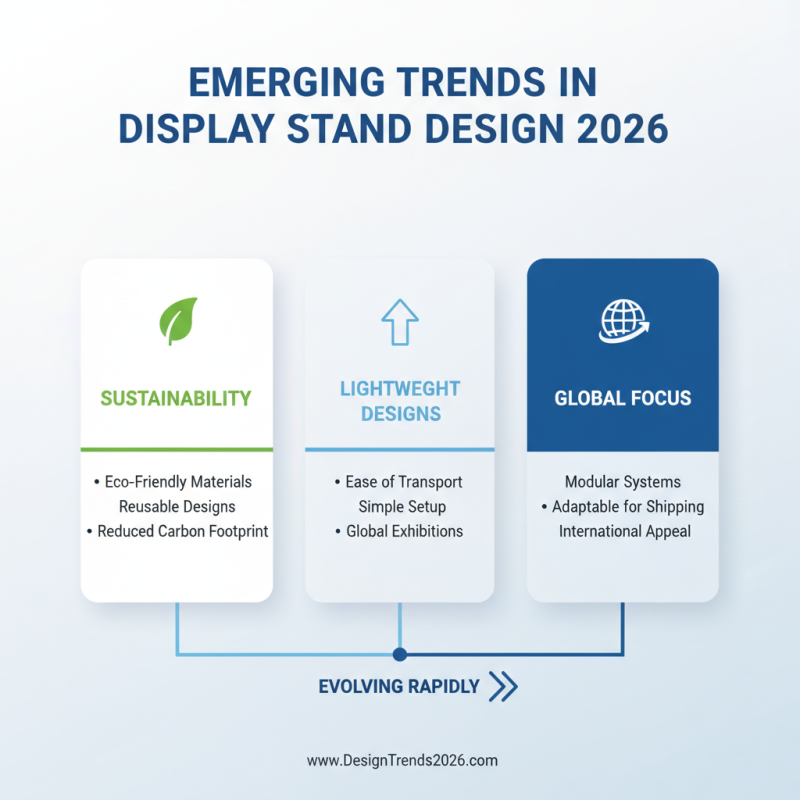
As we move towards 2026, display stand design is evolving rapidly. One significant trend is the focus on sustainability. Many buyers are seeking materials that are eco-friendly and can be reused. This shift is crucial as businesses aim to reduce their carbon footprints. Furthermore, lightweight designs are gaining attention. They offer ease of transport and setup, making them ideal for global exhibitions.
The integration of technology is also on the rise. Smart displays equipped with interactive features engage audiences more effectively. Touchscreens and augmented reality features create immersive experiences. However, relying too heavily on technology can backfire. Some consumers may prefer straightforward, traditional displays for their simplicity.
Tips: Always consider the target audience when selecting a design. Take time to understand their preferences. Additionally, ensure that the product is easy to assemble. Overly complex setups can frustrate users. Lastly, prioritize durability. A well-constructed stand ensures longevity, which can save money in the long run.
Conclusion
The article "Best Display Stand Options for Global Buyers in 2026" offers a comprehensive overview of key aspects to consider when selecting display stands for various needs. It emphasizes critical factors such as functionality, design, and material choice, highlighting the pros and cons of different materials used in display stands.
Moreover, the piece explores emerging trends in display stand design for 2026, showcasing innovative solutions that meet the evolving demands of the market. By comparing various types of display stands, the article provides insights into the latest designs and their advantages, equipping global buyers with the knowledge necessary to make informed decisions. Additionally, it lists top manufacturers and suppliers worldwide, ensuring readers can find reliable options to suit their specific requirements.

 Contact Us