Inquiry
Form loading...

How to Choose the Best Exhibit Stands in 2026?

Choosing the best Exhibit Stands in 2026 will require more than attractive graphics and a low rental price. Exhibitors now face tighter budgets, shorter attention spans, and stronger expectations for measurable business results. The Center for Exhibition Industry Research (CEIR) reported that the U.S. business-to-business exhibition sector continued recovering toward its pre-pandemic performance level, while UFI’s Global Exhibition Barometer showed sustained global growth and improving exhibitor confidence. These findings suggest a competitive market, not an easy one.

Kai Hattendorf, former UFI Managing Director and CEO, said, “The exhibition industry has proven its resilience.” That resilience should influence every design decision. A modular stand may reduce waste and simplify transport. A custom stand can create stronger visual impact, but it usually demands more planning, storage, and installation control. The right choice depends on visitor flow, objectives, venue restrictions, and post-show reuse.

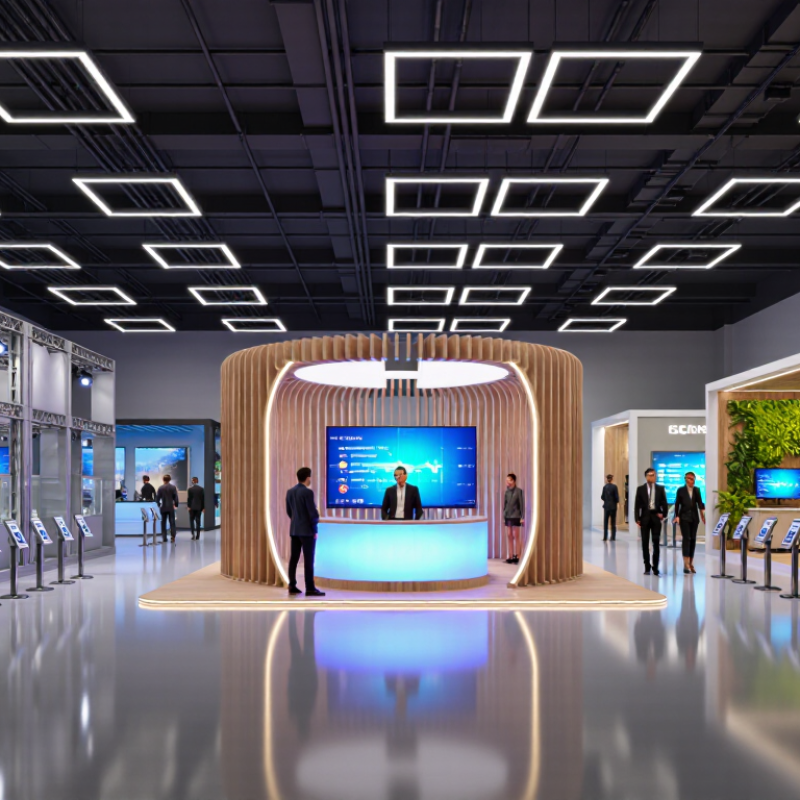
Think about the real scene. A visitor pauses beside a bright reception counter, scans a QR code, and speaks with a representative without blocking the aisle. That small moment matters. So does the cable hidden beneath the flooring.

Still, data cannot replace practical judgment. A beautiful stand may attract traffic but fail to generate qualified conversations. I have seen teams overvalue novelty and undervalue lighting, access, and staff training. That is an expensive mistake.

This guide compares materials, layouts, technology, sustainability, costs, and supplier reliability. It also questions popular assumptions. The best Exhibit Stands are not always the largest. They are the ones that support clear goals, credible experiences, and measurable follow-up.
How to Choose the Best Exhibit Stands in 2026?

Define Your Exhibit Goals and Audience

Before comparing exhibit stands, define what success means. A stand designed for lead generation needs clear meeting space, visible messaging, and easy contact capture. A product demonstration needs power access, storage, and an uncluttered viewing angle. Audience research matters just as much. UFI’s Global Exhibition Barometer reports consistently show that exhibitions remain important business platforms, but visitor expectations differ by market and industry.

Ask practical questions. Who must stop? What problem do they need solved? How much time will they spend? Freeman’s 2023 Trends Report found that 77% of surveyed attendees viewed in-person events as valuable for experiences unavailable online. That supports live interaction, but it does not justify adding every screen or feature. Too much technology can distract from a useful conversation.

Keep the goal measurable. Set targets for qualified leads, scheduled meetings, demonstrations, or direct sales discussions. CEIR research on exhibition performance stresses the importance of connecting objectives with measurable outcomes, rather than judging success by visitor numbers alone. A smaller stand may work better if it improves engagement quality. It may not. Your assumptions should be tested against previous event data, audience feedback, and floor traffic patterns. Review the plan with sales staff before approving the design. They often notice practical weaknesses that look invisible in a polished proposal.
How to Choose the Best Exhibit Stands in 2026?

Define Your Exhibit Goals and Audience

Use these planning scores to prioritize the capabilities your exhibit stand should deliver. Lead generation and product demonstrations typically require clear visitor flow, strong messaging, and flexible spaces, while brand awareness benefits from high visibility and memorable design.

Score scale: 1 = low importance, 5 = critical importance. Review the scores with your sales, marketing, and event teams before selecting a stand format.

Compare Exhibit Stand Types and Structural Features

How to Choose the Best Exhibit Stands in 2026?

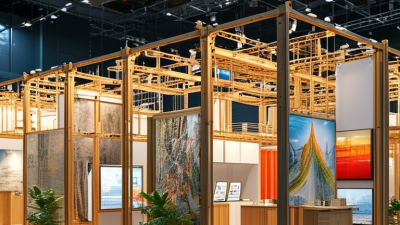
Exhibit stand types differ in appearance, strength, setup time, and reuse potential. Pop-up stands are lightweight and quick to assemble. They suit smaller spaces and limited budgets. Modular stands use reusable frames, panels, shelves, and counters. Their layouts can change between events. Custom-built stands offer stronger visual impact, but they often require more planning, transport, and skilled installation. Tension fabric systems create clean graphics with lightweight aluminum frames. Truss structures provide a more industrial look and support larger lighting or display elements.

Structural details deserve close attention. Check the frame material, joint quality, base stability, and connection method. A beautiful stand may perform poorly if its panels flex or its counter wobbles. Storage capacity matters too. Hidden cabinets can keep brochures, samples, and personal items away from public view. Cable channels reduce trip risks and create a cleaner presentation. Always confirm venue requirements, component load limits, access routes, and installation procedures with qualified contractors.

Tips: Choose structure before decoration. Measure the packed stand, not only the finished display. Ask how often parts can be reused. A cheaper frame may need replacement sooner. That calculation is easy to miss. Review lighting, graphics, flooring, and storage together. I would also leave extra setup time; even accurate drawings cannot prevent every on-site adjustment.

Evaluate Size, Layout, Branding, and Visitor Flow

How to Choose the Best Exhibit Stands in 2026?

Size should follow your visitor objective, not your ego. A compact 3-by-3-metre stand can outperform a larger space when every zone has a purpose. Reserve the front edge for an open welcome area. Place demonstrations at the side, so conversations do not block passing visitors.

The UFI Global Exhibition Barometer 2024 reported that 40% of companies expected exhibition activity to increase, raising competition for attention.

Measure the stand footprint against expected traffic, meeting targets, and storage needs. Too much furniture quietly reduces usable space.

Layout should guide people without making them feel managed. Use one clear message at eye level, then support it with two or three proof points.

Freeman’s 2024 Trends Report found that 74% of attendees value live events for learning opportunities, so practical demonstrations deserve more space than decorative walls.

Branding should remain readable from several metres away. Avoid crowded graphics and tiny text.

Visitor-flow checks can expose problems: watch where people pause, turn back, or avoid entering. This is where plans often fail.

Our own planning assumptions can be wrong. Test the layout with tape on the floor, and invite an unfamiliar colleague to walk through it.

If they cannot explain the offer in ten seconds, the stand needs sharper communication.

Assess Materials, Portability, Technology, and Sustainability

Choosing an exhibit stand in 2026 requires more than comparing attractive designs. Materials affect safety, appearance, transport, and reuse. Aluminum frames are light and durable, while fabric graphics reduce packed volume. Board panels create rigid walls, but they may add weight and disposal concerns. Ask for material specifications, fire-performance documents, and replacement options. I have found that vague “green” claims deserve careful questions. A lower price may hide frequent repairs.

Portability matters when teams work across cities. Measure the packed cases, not only the assembled footprint. Check wheel quality, handle strength, locking systems, and loading limits. A stand requiring three people may slow installation and increase labor costs. Request an assembly trial before purchase. Time each step. This exposes awkward connectors and missing tools. I once underestimated storage space, and the stand became difficult to use between events. That mistake changed my checklist.

Technology should support visitors, not distract from the message. Choose energy-efficient displays with accessible controls and replaceable components. Plan cable routes to prevent trip hazards. Confirm software support, data protection, and offline operation before the event. Sustainability also depends on years of use. Select modular parts that can be repaired, reconfigured, or reused. Ask about recycled content, packaging, shipping distance, and end-of-life collection. These details are sometimes unavailable. That is a warning. Record supplier answers and compare them with independent documentation before signing.

How to Choose the Best Exhibit Stands in 2026? - Assess Materials, Portability, Technology, and Sustainability
Exhibit Stand Type Primary Materials Typical Display Size Typical Packed Weight Portability and Setup Technology Integration Reusability and Sustainability Best Use Case Overall 2026 Assessment
Pop-Up Fabric Display Collapsible aluminum frame with stretch polyester or recycled polyester graphic Approximately 2.4–4.0 m wide and 2.3–2.5 m high Approximately 12–30 kg, depending on size and accessories High portability. Tool-free assembly commonly takes about 10–20 minutes. Usually packs into a wheeled carry case. Suitable for tablet shelves, monitor mounts, LED lighting, QR codes, and small interactive screens. High reusability when the frame is retained and graphics are replaced. Fabric graphics are lightweight and can reduce shipping volume. Frequent travel, seminars, product demonstrations, and compact booths High flexibility
Modular Aluminum System Extruded aluminum profiles, fabric panels, rigid graphics, and connector hardware Approximately 3–9 m wide; height commonly 2.4–4.0 m Approximately 40–180 kg, depending on configuration Medium portability. Components are reusable but require more cases, planning, and assembly time than a pop-up system. Strong integration potential for large displays, shelving, lighting, storage, counters, and cable management. Very high reusability. Aluminum is durable and widely recyclable. Reconfigurable parts can reduce the need for new structures. Medium and large exhibitions where the layout changes between events Best long-term value
Tension Fabric Wall Aluminum tube frame with silicone-edge fabric graphics, often polyester-based Approximately 1.0–6.0 m wide and 2.3–3.0 m high Approximately 8–35 kg, excluding large counters or monitors High portability. Lightweight frame sections and fabric graphics are generally easy to transport and assemble. Works well with backlighting, mounted displays, QR codes, and integrated LED systems when the frame is designed for them. High reusability with replaceable graphics. LED versions can increase energy use, so efficient lighting and timed controls are preferable. Brand backdrops, media walls, conferences, and visually focused displays Best visual impact
Portable Banner Stand Aluminum or steel roller mechanism with PVC, PET, or polyester banner material Approximately 0.8–1.5 m wide and 2.0–2.4 m high per unit Approximately 3–8 kg per unit Very high portability. Most units can be installed by one person in approximately 2–5 minutes. Limited integration. QR codes and small literature holders are practical; large screens are generally unsuitable. Moderate reusability. The mechanism can be reused, but replacing the full banner may create more material waste than replacing fabric panels. Short events, reception areas, presentations, and supplementary signage Best for low budgets
Reusable Timber-Based Stand Certified or reclaimed timber, plywood, water-based finishes, and reusable metal fittings Approximately 3–12 m wide; height depends on the engineered design Approximately 100–500 kg, depending on construction and furniture Low to medium portability. It is heavier and may require professional installation, transport equipment, and more storage space. Can support displays, lighting, product shelving, and concealed wiring, subject to structural and fire-safety requirements. Potentially high sustainability when designed for repeated assembly, certified timber, mechanical fixings, repairability, and local reuse. Flagship booths, premium product launches, and multi-event programs Best for premium reuse
Inflatable Display Coated polyester or nylon membrane with electric or sealed-air inflation system Approximately 2–8 m wide; height commonly 2–5 m Approximately 8–40 kg, excluding larger structural bases High portability after deflation. Setup commonly takes about 10–30 minutes, depending on size and inflation method. Suitable for internal LED lighting, projection surfaces, and lightweight digital signage; heavy equipment needs separate support. Reusable when stored and repaired correctly. Coated fabrics can be more difficult to recycle than uncoated textiles or aluminum components. Large visual statements, outdoor promotions, and unusual exhibit shapes Best for standout shapes
Custom Hybrid Stand Combination of aluminum, timber, recycled board, fabric, glass, lighting, and digital hardware Approximately 6–30 m² or larger, subject to venue regulations Approximately 150–800 kg, depending on construction and technology Low portability. It normally requires advance logistics, professional installation, dismantling, and dedicated transport. Highest integration potential for large-format LED screens, touch displays, sensors, charging points, lighting, and data-enabled experiences. Sustainability depends heavily on design. Reusable modules, rental hardware, repairable components, and recyclable materials substantially improve performance. Large trade shows, immersive experiences, and high-value product launches Best for experience

Note: Weight, dimensions, setup time, and sustainability outcomes are indicative industry ranges. Actual figures vary according to stand size, graphics, lighting, furniture, venue regulations, transport cases, and the number of planned reuses.

Set a Budget and Select a Reliable Stand Provider

How to Choose the Best Exhibit Stands in 2026?

Set a Budget and Select a Reliable Stand Provider

A realistic budget should cover more than the stand structure. Include design, graphics, lighting, transport, installation, storage, and venue fees. CEIR’s 2023 Economic Impact Study estimated that U.S. business exhibitions generated 97.3 billion dollars in direct spending during 2022. That scale reflects serious competition for visitor attention. Your stand must work hard, but it should not consume the entire marketing budget.

I usually divide the budget into three parts: construction, visitor experience, and contingency. Keep at least 10 percent for changes. Small errors become expensive onsite. A reliable provider should offer clear drawings, material specifications, safety documents, delivery dates, and a named project manager. Ask for references from similar exhibitions. Check photographs carefully. Look for cable control, stable flooring, readable graphics, and accessible storage. The 2024 UFI Global Exhibition Barometer reported that 52 percent of respondents expected exhibition activity to increase. More activity can mean stronger competition and tighter supplier schedules.

Do not choose from price alone. The cheapest quotation may exclude installation or electrical work. Request an itemised proposal instead. Compare revision limits, cancellation terms, insurance coverage, and onsite support. I would also test the provider’s response time before signing. It is a small test, but revealing. A polished portfolio is useful; documented delivery is better.