Inquiry
Form loading...

How to Choose China Top Modular Exhibition Stands?

Choosing China’s top modular exhibition stands requires more than comparing attractive photographs or low factory prices. The right decision connects design, engineering, logistics, visitor movement, and measurable business goals. Kai Hattendorf, former UFI managing director and CEO, has emphasized, “Exhibitions are about people meeting people.” That principle remains practical. A stand should invite conversation, not simply occupy floor space.

Exhibition Stands Modular can offer faster installation, reusable components, and flexible layouts across different Chinese venues. However, quality varies considerably. Inspect aluminum profiles, locking systems, graphic tension, lighting safety, and storage details before ordering. Ask for factory photographs, material samples, installation videos, and references from completed projects. A reliable supplier should explain fire-retardant materials, electrical planning, transport protection, and venue compliance without vague promises. Experience matters here. A beautiful 3D rendering cannot reveal a weak connector or a delayed shipment.

Consider the visitor’s first three seconds. Can they see your brand from the aisle? Can two salespeople speak comfortably beside the product display? Does the counter hide brochures, cables, and personal belongings? Small details often influence professional credibility. Budget remains important, but the cheapest quotation may exclude installation, graphics, lighting, or local service. That is where disappointment begins.

No stand is perfect. Even experienced teams overlook something. Build a written checklist, test the layout at human scale, and leave time for correction. This guide explains how to evaluate China-based suppliers, compare modular systems, and select a stand that performs beyond the opening ceremony.
How to Choose China Top Modular Exhibition Stands?

Define Stand Requirements: Space, Budget, Load Capacity, and Reuse Goals

How to Choose China Top Modular Exhibition Stands?

A practical stand begins with four figures: floor space, budget, load capacity, and reuse goals. Measure the booth area, ceiling height, storage zone, and visitor flow before requesting designs. A 36-square-metre stand may look generous on paper. Furniture, lighting, product displays, and meeting tables quickly reduce usable space.

Budget should include transport, installation, dismantling, graphics, storage, and replacement parts. UFI’s 2024 Global Exhibition Barometer reported strong exhibition-market recovery, with many companies expecting double-digit revenue growth. That recovery increases demand for fast, reusable systems. Load capacity needs equal attention. Ask for tested limits for shelves, hanging signs, counters, and monitors. Do not rely on attractive renderings alone. A structural calculation is less exciting, but more useful. The first drawing is rarely right.

Tips: Prepare a requirement sheet before contacting suppliers. State the exact booth size, product weights, power needs, event city, and reuse schedule. If the stand will travel between cities, choose tool-free connections and replaceable panels. Oxford Economics and the Events Industry Council reported that business events generated 1.6 trillion dollars globally in 2023. Reusable construction can support repeated participation, but only when packing dimensions and repair access are planned early. A lower initial price may become expensive after several events. Ask for material specifications, load tests, warranty terms, and a clear cost breakdown.

Verify Supplier Quality Through ISO 9001, UFI, and Safety Compliance

Choosing a top modular exhibition stand supplier requires more than attractive renderings. Ask for a current ISO 9001 certificate and check its company name, scope, expiry date, and issuing organization. ISO 9001 shows controlled processes, but it does not automatically prove perfect workmanship. Inspect production photos, sample joints, frame finishes, and packaging methods. Small details matter during installation.

UFI-related credentials can support a supplier’s exhibition experience and professional standing. However, UFI recognition is not a substitute for product safety certification. Request project references, installation records, and clear communication procedures.

For safety compliance, review fire-retardant material reports, electrical test documents, structural load calculations, and local venue requirements. A reliable supplier should explain these documents without hesitation.

Tips: Verify certificates independently. Ask for a recent sample. Confirm who handles onsite repairs. Check whether replacement graphics and hardware are available. Do not rely on a logo alone. Documents can look convincing, yet gaps may appear during setup. I would also request a written inspection checklist before shipment. It may feel excessive, but one missing connector can delay an entire opening. Evaluate both paperwork and physical evidence before choosing.

Compare Modular Systems by Reusability, Setup Time, and 3×3 m Adaptability

Choosing a top modular exhibition stand starts with its second and third use. UFI’s 2024 Global Exhibition Barometer reported continued growth in exhibition activity, making reuse increasingly practical. A frame that serves a 3×3 m booth today should also support a 3×6 m layout tomorrow. Check connection points, panel sizes, storage cases, and replacement parts before ordering.

Setup time matters when venue access is short. The Event Industry Council’s 2023 Economic Impact Study estimated that business events generated $1.6 trillion in global spending. That scale creates pressure for faster, more reliable installation. In our experience, a well-designed 3×3 m system can be assembled by two trained staff within several hours. However, supplier estimates often exclude lighting, graphics, flooring, and final safety checks. That is where plans become less perfect.

Reusability should be measured, not assumed. Ask how many cycles the frame, fabric, hinges, and printed panels can realistically survive. The International Federation of Exhibition and Event Services promotes modular thinking because adaptable components can reduce material waste across repeated events. For a 3×3 m stand, choose tool-light joints and graphics that can be replaced separately. Test one complete build before approving a large order. Small alignment problems become expensive on a crowded show floor.

Assess Materials, Graphics, Lighting, and Structural Load Ratings

How to Choose China Top Modular Exhibition Stands?

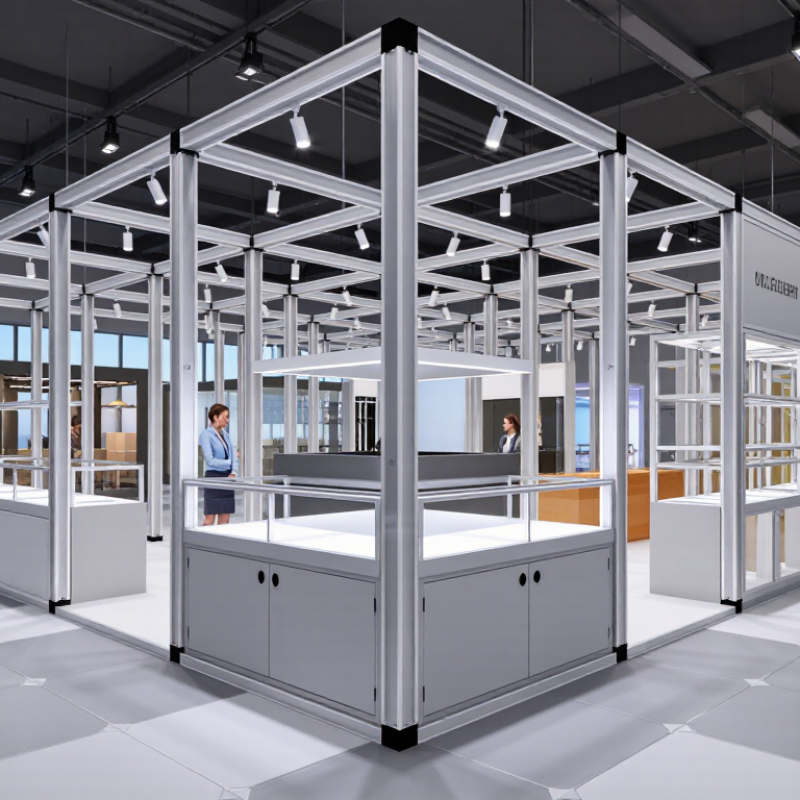
Material selection affects transport, assembly, safety, and repeated use. Aluminum profiles offer a practical balance between strength and weight. Check the profile thickness, joint quality, surface finish, and available fire-safety documentation. A stand may look elegant but still feel unstable when visitors lean against it. Ask for test reports and clear structural drawings, not only attractive renderings.

Graphics should fit tightly without wrinkles, visible gaps, or distorted colors. Request a physical color proof before production. Fabric graphics can reduce weight, while rigid panels may provide sharper edges and stronger impact resistance. Lighting needs equal attention. Use low-heat LED fixtures with suitable color rendering for products and printed images. Confirm cable routes, power loads, plug locations, and glare control during the design stage. Test it early.

Structural load ratings must match every suspended sign, screen, shelf, and light. The supplier should state allowable loads, fixing methods, safety factors, and floor requirements in writing. Do not assume a modular frame can support extra equipment simply because it looks solid. I have seen projects where late lighting changes forced unstable revisions. That mistake is avoidable. Still, specifications can be incomplete or misunderstood between teams. Have an experienced engineer review the drawings, especially for tall walls and overhead elements. Details matter.

Evaluate China Suppliers Using Lead Time, Warranty, Certifications, and ROI

How to Choose China Top Modular Exhibition Stands?

Lead time should mean more than a shipping estimate. Request a dated production schedule, including artwork approval, fabrication, inspection, packing, and dispatch. Ask how delays are handled when graphics need correction. For a major exhibition, allow buffer time for customs and venue delivery. A promised ten-day build may become three weeks. That gap matters.

Warranty terms reveal supplier reliability. Check coverage for frames, connectors, lighting, printed panels, and replacement parts. Confirm whether labor, shipping, and accidental damage are excluded. Request certification copies and verify their validity, issuing body, and product scope. A certificate without matching product details offers limited protection. I have seen buyers trust attractive documents too quickly. That is a weakness worth examining.

Tips: Compare total cost, not only the quotation. Include freight, installation, storage, repairs, and future graphic changes. Calculate the cost per event across several exhibitions. A reusable modular stand may cost more initially but reduce long-term spending. Measure ROI through qualified leads, meetings, visitor traffic, and reusable components. Ask for material samples and inspect connector strength before ordering. Small defects become expensive under exhibition lighting. Suppliers should provide clear drawings, packing lists, and a responsible project contact. However, no evaluation is perfect; delivery conditions and venue rules can still change the result.